Chicago Apartment Shortage Fuels Deals
A severe shortage of new apartments in Chicago is strengthening market fundamentals, driving major acquisitions and making office-to-residential conversions a key trend.
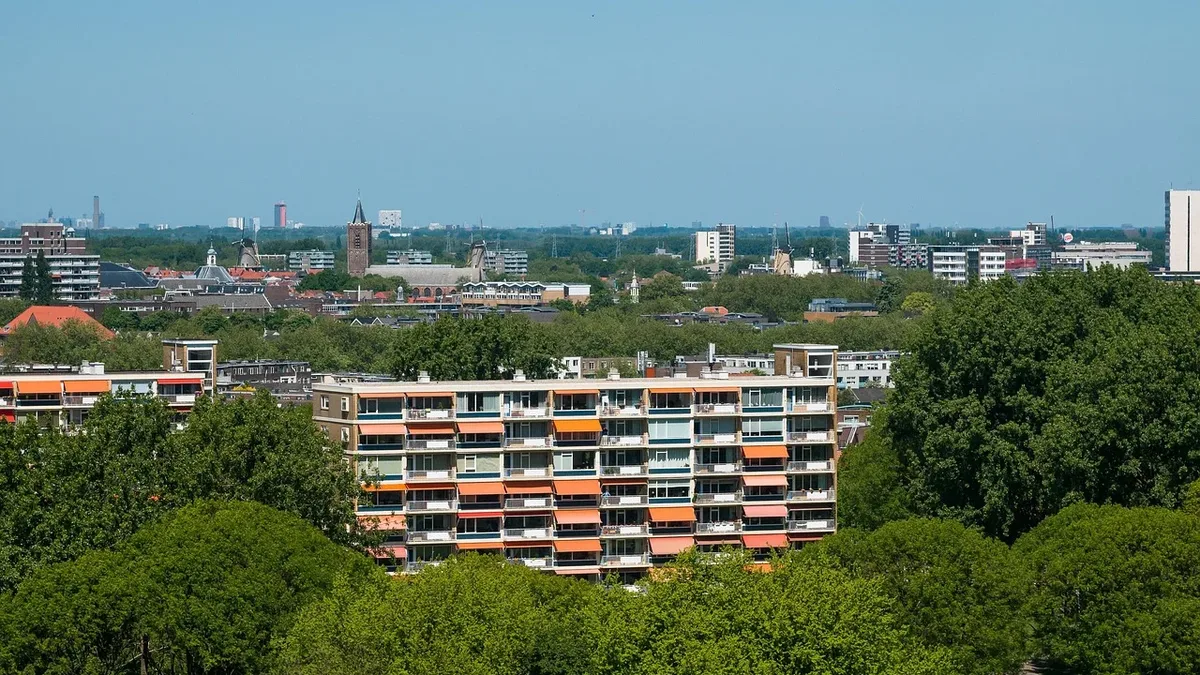
Chicago's apartment market is severely short on new supply. This scarcity is strengthening underlying market fundamentals and prompting major acquisition deals alongside a wave of office-to-residential conversions, panelists said at the Bisnow Multifamily Annual Conference Midwest last Thursday.
Charles Tourtellotte, CEO of LaTerra Cos., explained that these supply constraints created a favorable formula for his firm's recent major purchase. At the end of last year, the California-based company acquired a nearly 1,500-unit multifamily portfolio for $455M. He reported the properties have occupancies in the low to mid-90% range, with lease trade-ups running between 5% and 7%.
Tourtellotte said he is as happy as he could be about the deal. He noted that this portfolio in particular was attractive because it had 4% interest-only assumed financing. He argued that buying at a six cap with such financing promises strong cash flow.
The Drying Development Pipeline
The overall downtown development pipeline remains sparse. According to data from Cross Street, there were just under 5,300 units under construction as of June 30. Only 843 units were delivered in the first half of 2026, with another 861 units expected to come online through the end of the year.
Adam Friedberg, CEO of Mavrek Development, welcomed the limited competition. He said one of the reasons he loves Chicago for a developer is there is very little competition.
Adaptive Reuse Dominates New Deliveries
Adaptive reuse projects now constitute a significant portion of the slow pipeline. Cross Street data indicates these conversions are slated to account for about 44% of all units delivered downtown in 2026. Currently, 117 such units have been delivered, with 823 more under construction.
Mavrek Development is converting the historic office building at 65 E. Wacker Place into 252 luxury apartments. Friedberg said residents will begin moving in within weeks. The building is about 27% preleased, a notable figure given that tours for potential tenants have been conducted through an active construction site without a finished lobby.
Friedberg sees immense potential in this trend. He stated that he does not know if there has ever been a bigger opportunity in real estate than office conversion. He pointed to the rare chance to repurpose well-located but empty buildings.
The Challenge of Making Projects Pencil
Despite strong rents, new construction remains financially challenging. Friedberg argued that nothing is getting cheaper to build, as material and labor costs do not significantly decrease over time. Mark Fogel, CEO of Acres Commercial Realty, agreed. As a lender viewing properties nationally, he sees little rent growth outside New York and Chicago.
Fogel said of Chicago that here, it has not gotten way out of balance. He added that he does not think it is supply and demand, but they are still not able to make it pencil.
Friedberg outlined the narrow path for viable new development. For a project to make financial sense, it must either be very large, potentially utilizing tax credits, or very small to save on labor costs. Mavrek generally targets around a 7% return on cost and seeks long-term investors who can sell when conditions are optimal.
Tourtellotte added that while Chicago rents have kept pace with new construction costs, making that case is harder in other markets.