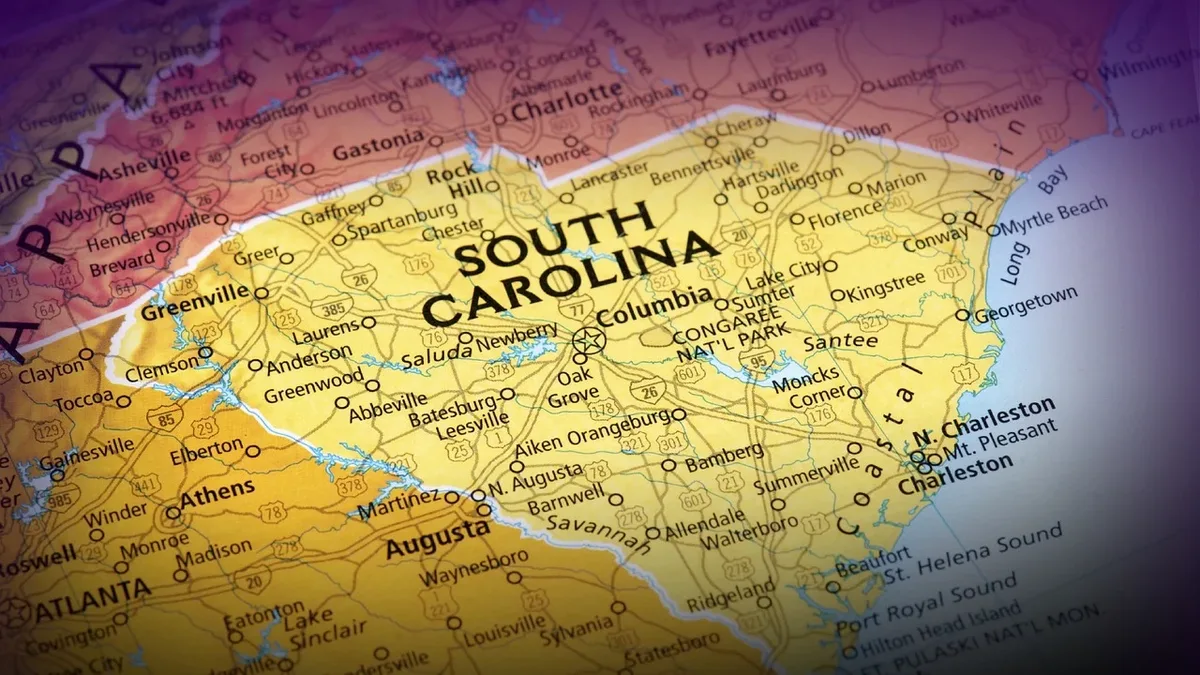
South Carolina
| Capital | Columbia |
|---|---|
| Largest city | Charleston |
| Nickname | The Palmetto State |
| Statehood | 1788 (8th state) |
| Time zone | Eastern (most of state) |
| Climate | Humid subtropical |
| Major terrain | Coastal Plain, Piedmont, Blue Ridge Mountains |
| Major river | Savannah River |
Best places to live in South Carolina
The Upstate region, anchored by Greenville, is often cited for its vibrant downtown, strong job market tied to manufacturing and international companies, and proximity to outdoor recreation in the Blue Ridge Mountains. Charleston remains a perennial favorite for its historic charm, robust cultural and dining scene, and coastal location, though it contends with higher costs and tourist traffic. Columbia, the state capital, offers affordability, stable government and university employment from the University of South Carolina, and a central location. The Lowcountry outside Charleston, in areas like Mount Pleasant or Summerville, provides a blend of suburban living with marsh and beach access. Smaller cities like Rock Hill, near Charlotte, North Carolina, offer suburban amenities with cross-border metro access. Spartanburg is noted for its lower cost of living and ongoing downtown revitalization efforts.
Overview
South Carolina is a southeastern U.S. state characterized by distinct geographic regions: the Blue Ridge Mountains in the Upstate, the rolling Piedmont in the midlands, and the Atlantic coastal plain in the Lowcountry. Its economy has historically been based on agriculture, manufacturing, and tourism, with significant modern growth in advanced manufacturing, aerospace, and port logistics in Charleston. The climate is humid subtropical, featuring hot, humid summers and generally mild winters, with the coastal region being particularly susceptible to humidity and hurricane season influences. The state's culture is deeply rooted in Southern history, with Gullah Geechee heritage preserved along the coast and a notable role in the American Revolution and Civil War. Population growth has been steady, driven in part by domestic migration from more expensive northern and midwestern states seeking a lower cost of living. Major interstate corridors, like I-85 and I-26, connect its primary cities and facilitate regional commerce.
What to know
Property taxes in South Carolina are among the lowest in the nation, but this is partially offset by a higher-than-average sales tax and specific vehicle taxes. The state has a homestead exemption program that can reduce property tax burdens for primary residents who are elderly or disabled. Homeowners' insurance, particularly in coastal zones, can be costly and sometimes difficult to obtain due to hurricane risk, often requiring separate wind and hail coverage. The residential rental market includes standard leases, and landlord-tenant laws are considered to lean in favor of property owners, so understanding lease terms is crucial. When building a home, be aware that development regulations, building codes, and permitting processes can vary significantly between counties and municipalities, especially in unincorporated areas. Due to the climate, considerations like HVAC efficiency, humidity control, and foundation type are important long-term factors in home maintenance.
Common questions
A common question is about hurricane preparedness and insurance, with potential residents needing to understand evacuation zones, flood insurance requirements through the National Flood Insurance Program, and the added cost of windstorm coverage. People often ask about the property tax structure, including how the 4% assessment ratio for owner-occupied primary residences works to lower the taxable value. Many inquire about the job market outside of major metros, as opportunities in smaller towns can be more limited and concentrated in specific industries like healthcare, education, or manufacturing. Questions frequently arise about the cultural and social environment, with concerns about the pace of life, political climate, and the strength of community ties in different areas. Prospective builders ask about the feasibility and restrictions of constructing homes near wetlands or on barrier islands, which involves state coastal zone management regulations. Renters commonly want to know about typical lease terms, security deposit limits, and the process for handling repair requests under state law.
Pros and cons
A significant pro is the low overall cost of living compared to the national average, driven by affordable housing markets in many inland areas and low property taxes. The climate offers a long growing season and mild winters, which is attractive to those seeking to avoid harsh northern winters. Cons include the high humidity and heat of summer, which can be oppressive and lead to substantial cooling costs, and the active hurricane season that brings property risk and insurance complications to the coastal third of the state. The state's infrastructure, particularly in rural and some rapidly growing suburban areas, sometimes struggles to keep pace with population growth, leading to traffic congestion and strains on public services. Some people regret moving to very small towns without sufficient research, finding limited job opportunities, healthcare access, or cultural amenities, leading to isolation. A common mistake is underestimating the total cost of homeownership by focusing only on the low purchase price while not fully accounting for higher insurance premiums, older home maintenance, or the need for pest control due to termites and other pests prevalent in the region.
Who it suits
South Carolina suits retirees seeking a warmer climate, lower taxes, and slower pace of life, particularly in communities designed for active adults or smaller coastal towns. It is a good fit for professionals who secure employment in the state's growing sectors like manufacturing, healthcare, or logistics, especially in the Greenville, Columbia, or Charleston metro corridors. The state appeals to remote workers or military families stationed at bases like Fort Jackson, Shaw Air Force Base, or Marine Corps Recruit Depot Parris Island, who prioritize housing affordability and space. It suits outdoor enthusiasts who enjoy beach life, freshwater lakes, fishing, boating, and hiking in the mountains and state parks. Families may find it suitable in suburbs with strong public school districts or in areas with access to private school options, though school quality varies widely by county. It also suits those deeply interested in Southern history, architecture, and traditional crafts, who appreciate the preservation efforts in historic cities and towns.
Latest South Carolina news
Latest reporting

South River Mortgage names Tyler Plack CEO
South River Mortgage names Tyler Plack as its new CEO after Jim Plack's retirement. The Maryland reverse lender also expanded operations to 39 states.
The Future of Luján's Big Cats After Zoo Closure
Following the 2020 closure of Luján's private zoo, 62 big cats remained in limbo until FOUR PAWS intervened. Thirty were recently relocated to...