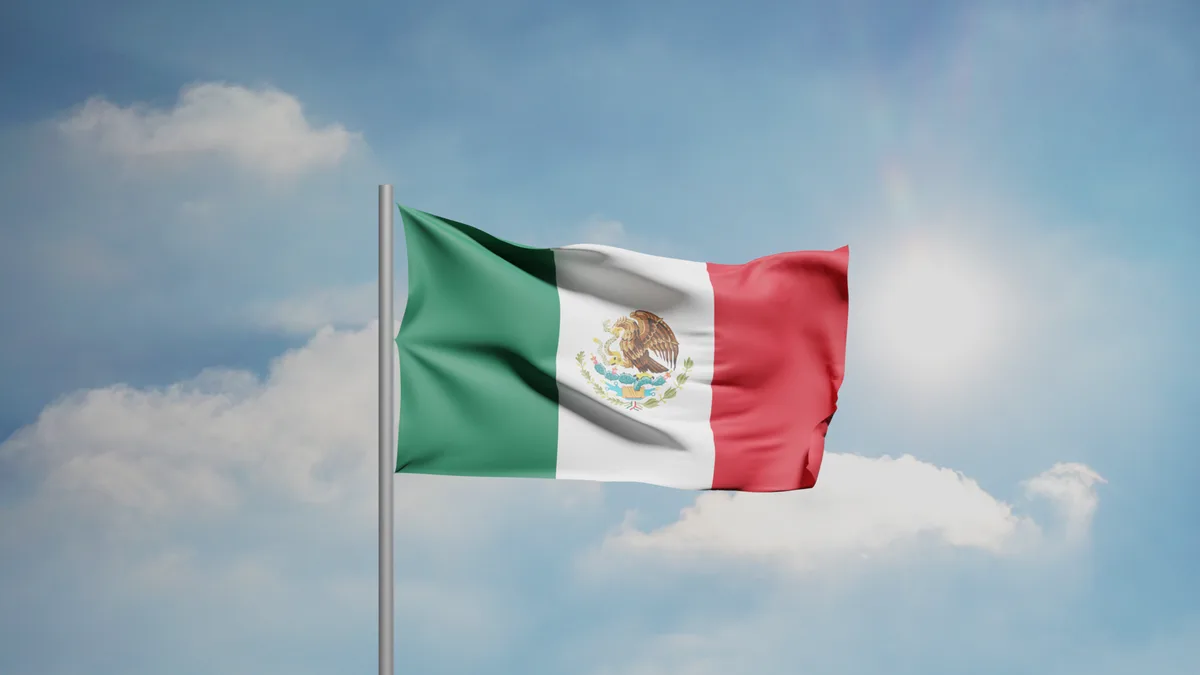
Mexico
| Country of origin | Mexico |
|---|---|
| Official language | Spanish |
| Currency | Mexican peso (MXN) |
| Common property types | Condominiums, single-family homes, townhouses |
| Typical lease term | 12 months |
| Common transaction process | Involves a notary public |
| Primary ownership document | Escritura pública |
Origin and history
Mexico originates from the ancient civilizations of Mesoamerica, including the Olmec, Maya, and Aztec empires, which established complex societies on the land for millennia prior to European contact. The modern nation-state of Mexico was created following a prolonged war for independence from Spain, which was decisively won in the early 19th century, establishing the sovereign country. Its territorial shape has evolved significantly since then through events including the loss of northern territories to the United States in the mid-19th century and the Mexican Revolution in the early 20th century. The late 20th century saw major economic shifts, including the signing of the North American Free Trade Agreement in the 1990s, which further integrated Mexico with the U.S. and Canada. These historical layers directly inform the contemporary legal framework governing land ownership, foreign investment, and housing development across the country.
What it is for
Mexico is a sovereign federal republic in North America, providing a national legal and administrative structure for the habitation and economic activities of its population. For housing transactions, the country provides a defined system of property rights, regulated primarily through its Civil Codes and the National Agrarian Registry, which govern private ownership and communal lands respectively. The framework is designed to facilitate the buying, selling, renting, and construction of residential property, whether for primary residence, vacation use, or investment purposes. Specific zones, known as the Restricted Zone, regulate foreign ownership within 100 kilometers of borders and 50 kilometers of coastlines, requiring the use of a bank trust or a Mexican corporation. The system also encompasses formal social housing programs developed by institutions like INFONAVIT, which provide financing for eligible workers. Furthermore, it establishes the legal procedures for transferring title, registering deeds with the Public Property Registry, and resolving disputes, which are essential for securing any real estate interest.
Pros and cons
A significant advantage is the diversity of housing markets, offering everything from affordable modern developments in expanding cities to luxury coastal properties, often at lower purchase prices compared to many other North American destinations. The legal system, when properly navigated with expert assistance, provides clear mechanisms for secure ownership, including the fideicomiso (bank trust) for foreigners in restricted areas, which is a well-established instrument. Conversely, a common and serious mistake is proceeding without competent, independent legal counsel, leading to issues with unclear title, ejido land disputes, or fraudulent sales, particularly in informal markets. Many buyers regret not thoroughly investigating all closing costs, which include transfer taxes, notary fees, and legal expenses, as these can add a substantial percentage to the purchase price. The process can be bureaucratically slow, with registry delays and varying enforcement of regulations across states, creating uncertainty in transaction timelines. Those who purchase in rapidly developing coastal areas sometimes later regret insufficient due diligence on environmental regulations, infrastructure reliability, or long-term maintenance costs for the property.
Who it suits
This housing environment suits retirees, particularly from the United States and Canada, seeking a lower cost of living and warmer climate, who are prepared to manage the legalities of foreign ownership and potential cultural adjustments. It is also suitable for investors with a long-term horizon and a tolerance for procedural complexity, who are interested in tourist rental markets or urban development projects in cities like Mérida or Mexico City. Individuals and families with dual nationality or strong, established local connections through marriage or long-term residency are often better positioned to navigate the market intricacies and identify trustworthy professionals. The system suits those seeking a primary residence in well-developed expatriate communities, such as certain neighborhoods in San Miguel de Allende or Lake Chapala, where support networks and familiar services exist. It is less suited for individuals seeking a quick, simple, or purely speculative investment without a commitment to engaging local expertise and understanding regional variations in law and practice. Ultimately, it suits cautious, well-researched individuals who value the lifestyle and economic opportunities enough to invest the time and resources required for a secure transaction.
Latest Mexico news
Latest reporting

Weather Forecast for Mexico
The weather forecast for Mexico indicates a mix of sunny and rainy conditions across different regions.

Mexico Launches Second Compact Electric Vehicle for Small Businesses
The Mexican government has unveiled Olinia Carga, a compact electric vehicle designed for small businesses and entrepreneurs to transport goods and...

Cuautitlán Izcalli Floods: Emergency Operation Deployed After Heavy Rainfall
Heavy rainfall in Cuautitlán Izcalli, Mexico, has caused flooding and a sinkhole, prompting an emergency operation to remove water from streets and...
CDMX Official Links Visa Revocation of 4T Members to Ideological Reasons, Citing Historical Precedents
César Cravioto, Secretary of Government of Mexico City, attributes the revocation of visas for figures linked to the Fourth Transformation (4T)...